Six yards of pure grace
Welcome to the blog of sarees
Paithani
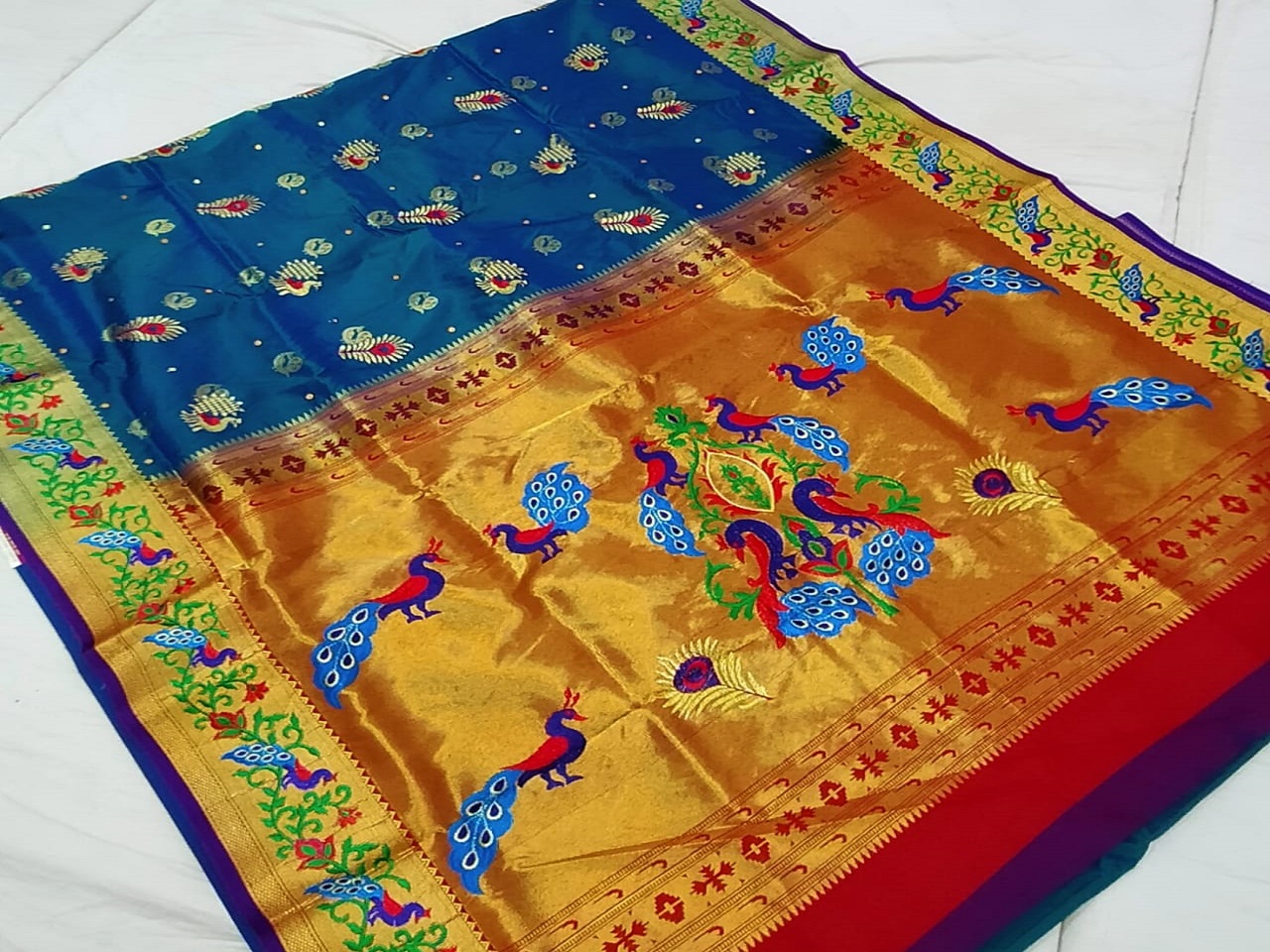
Paithani (Marathi:पैठणी) is a variety of sari, named after the Paithan town in Aurangabad from state of Maharashtra where the saree was first made by hand. Present day Yeola town in Nashik, Maharashtra is the largest manufacturer of Paithani.
Paithani is characterised by borders of an oblique square design, and a pallu with a Peacock design. Plain as well as spotted designs are available. Among other varieties, single colored and kaleidoscope-colored designs are also popular. The kaleidoscopic effect is achieved by using one color for weaving lengthwise and another for weaving width wise.
Peshwai
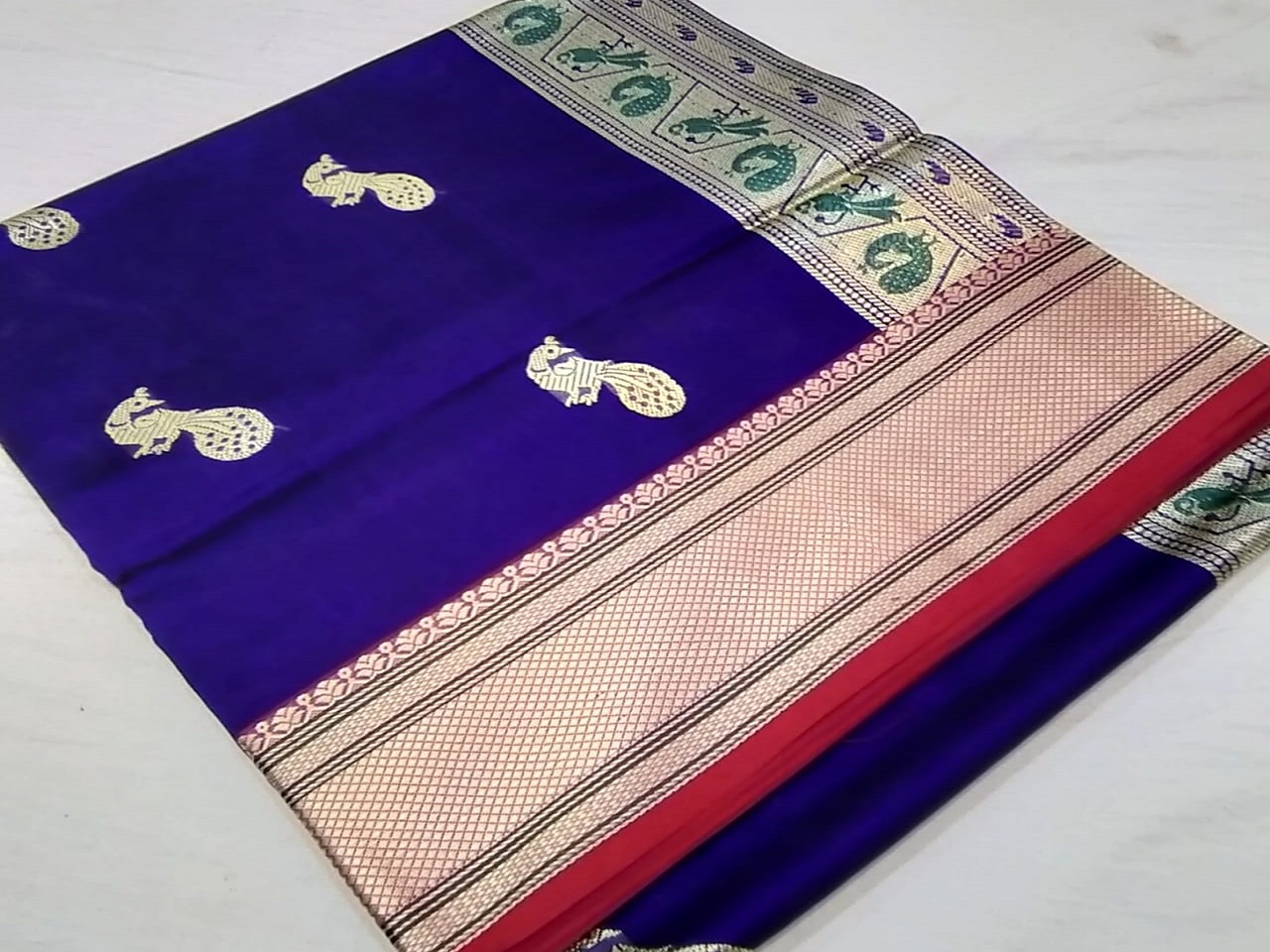
Peshwai Paithani silk saree is from the heart of Yeola. It is also called as Daagina silk because it has intricate thread work on the border and pallu of the saree. Best part of wearing this saree is, it is very light weight and easy to carry and at the same time, looks very elegant. Apt for flaunting in wedding functions.
The sarees are the tradition of Marathas the Peshwa Era and tribe, whom kept the traditional weave of Paithani Sarees alive even during the Mughal Sultanate Rule. Peshwai is a style of the traditional saree drape look of Marathas. The Brahmini or Peshwai Nauwari saree drape is worn in a Paithani saree of 9 yards long. They are worn for special occasions of Marathi Culture and worn by Brides too as a tradition.
Banarasi
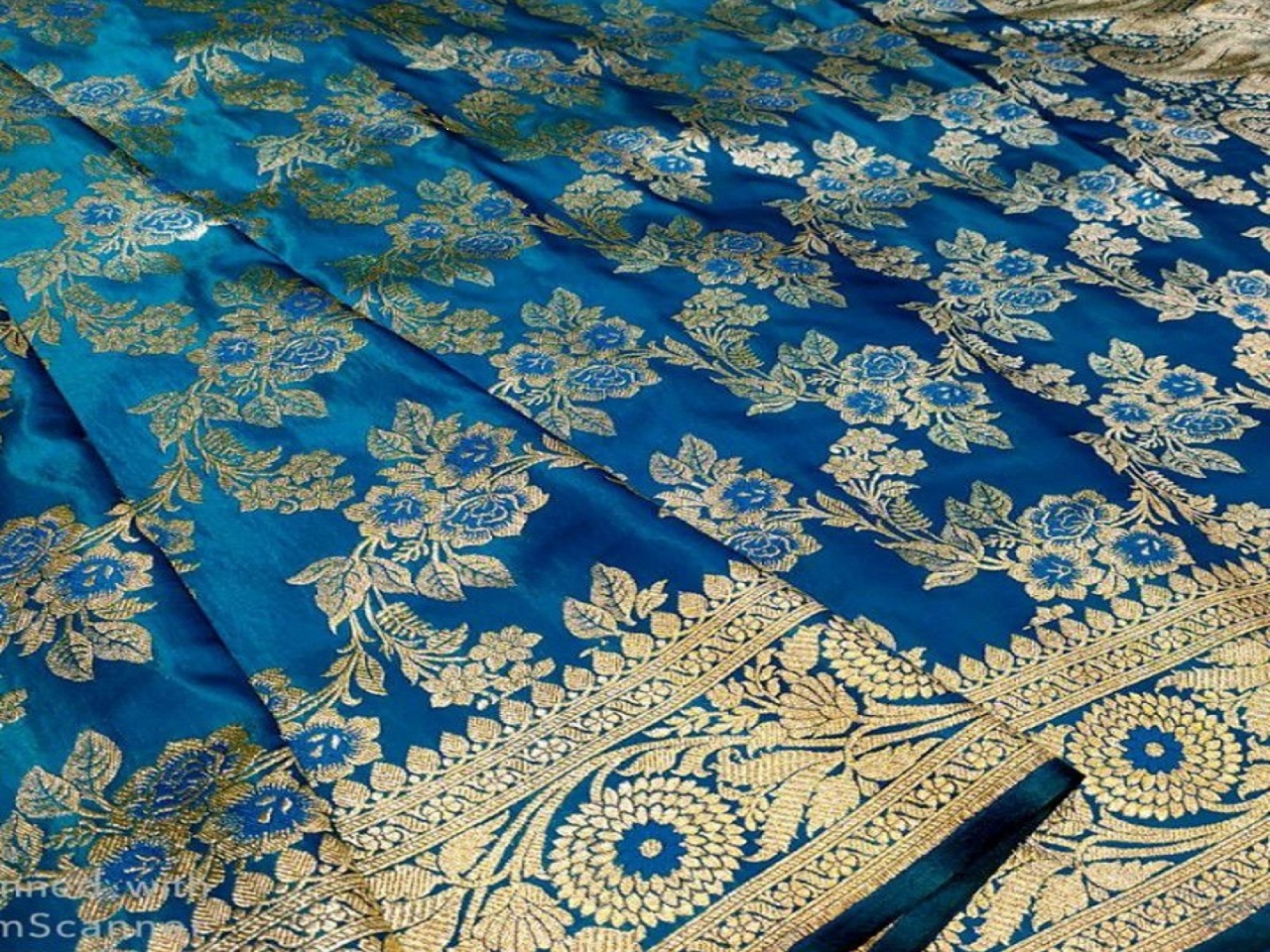
A Banarasi sari is a sari made in Varanasi, an ancient city which is also called Benares (Banaras). The saris are among the finest saris in India and are known for their gold and silver brocade or zari, fine silk and opulent embroidery. The saris are made of finely woven silk and are decorated with intricate design, and, because of these engravings, are relatively heavy.
A man making a handcrafted Banarasi Silk sari Their special characteristics intricate intertwining floral and foliate motifs, kalga and bel, a string of upright leaves called jhallar at the outer, edge of border is a characteristic of these saris. Other features are gold work, compact weaving, figures with small details, metallic visual effects, pallus, jal (a net like pattern), and mina work.
Irkal
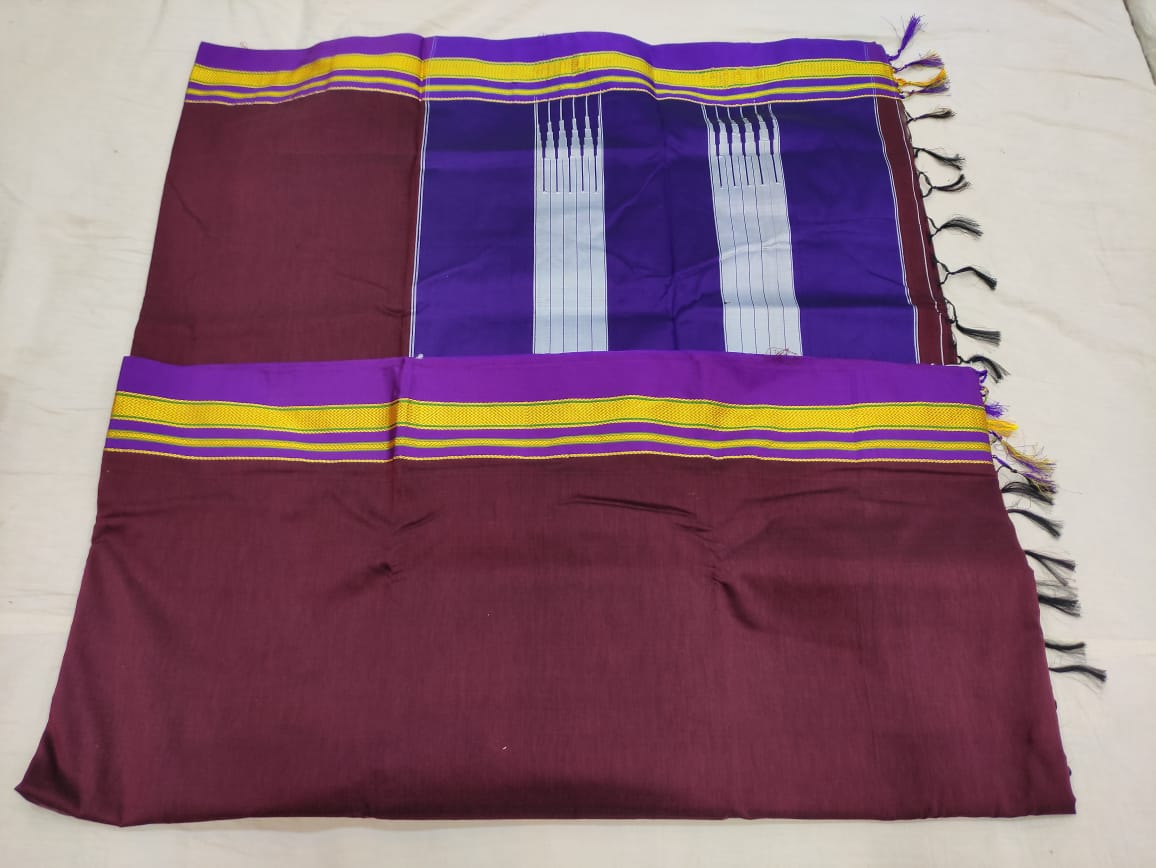
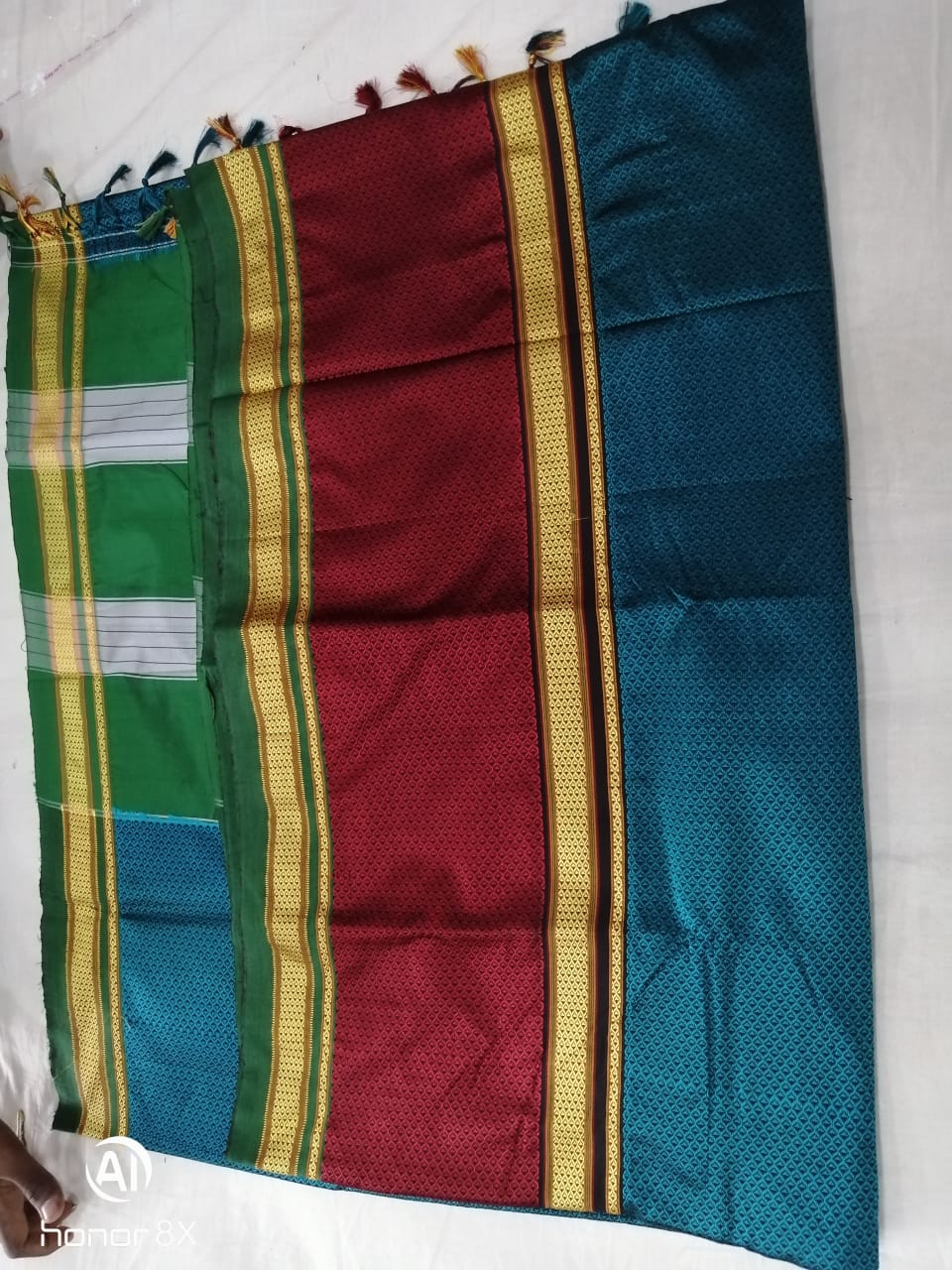
Irkal sari is a traditional form of sari which is a common feminine wear in India. Ilkal sari takes its name from the town of Ilkal in the Bagalkot district of Karnataka state, India. Ilkal saris are woven using cotton warp on the body and art silk warp for border and art silk warp for pallu portion of the sari. In some cases instead of art silk, pure silk is also used. Ilkal sari has been accorded geographical indication (GI) tag.
Khun
Khun otherwise known as Khana, is a beautiful, light-weight fabric that comes in combinations and innumerable designs, motifs, and patterns on the cloth. Traditionally preferred by women in North Karnataka and Maharashtra, this cotton-silk pure handwoven fabric was used to stitch a blouse to be paired with Ilkal sarees from the same region. Estimated to be over 200 years old, this traditional fabric is not at all an easy task to weave. Firstly, a desirable color and shade are formed by mixing different dye powders.
Once the color is ready, the yarn is hung on a steel rod and then dipped into the colored water which is heated in a huge metal pot at a temperature of about 40 to 50-degree celsius. After around 30 minutes, the color starts latching onto the yarn. After another half hour, the yarn is squeezed and put in a dryer to quicken the drying process. The dried yarn is then neatly combed and put together to be used in a handloom. The yarn is then passed on to the weavers to start with the weaving process which takes around 15 days to make around 20 meters of Khun. This indeed is a painstaking process to make the fabric but one will surely be amazed by the rhythmic taps and clacks of the handloom which sound poetic and musical to ears
Ikkat
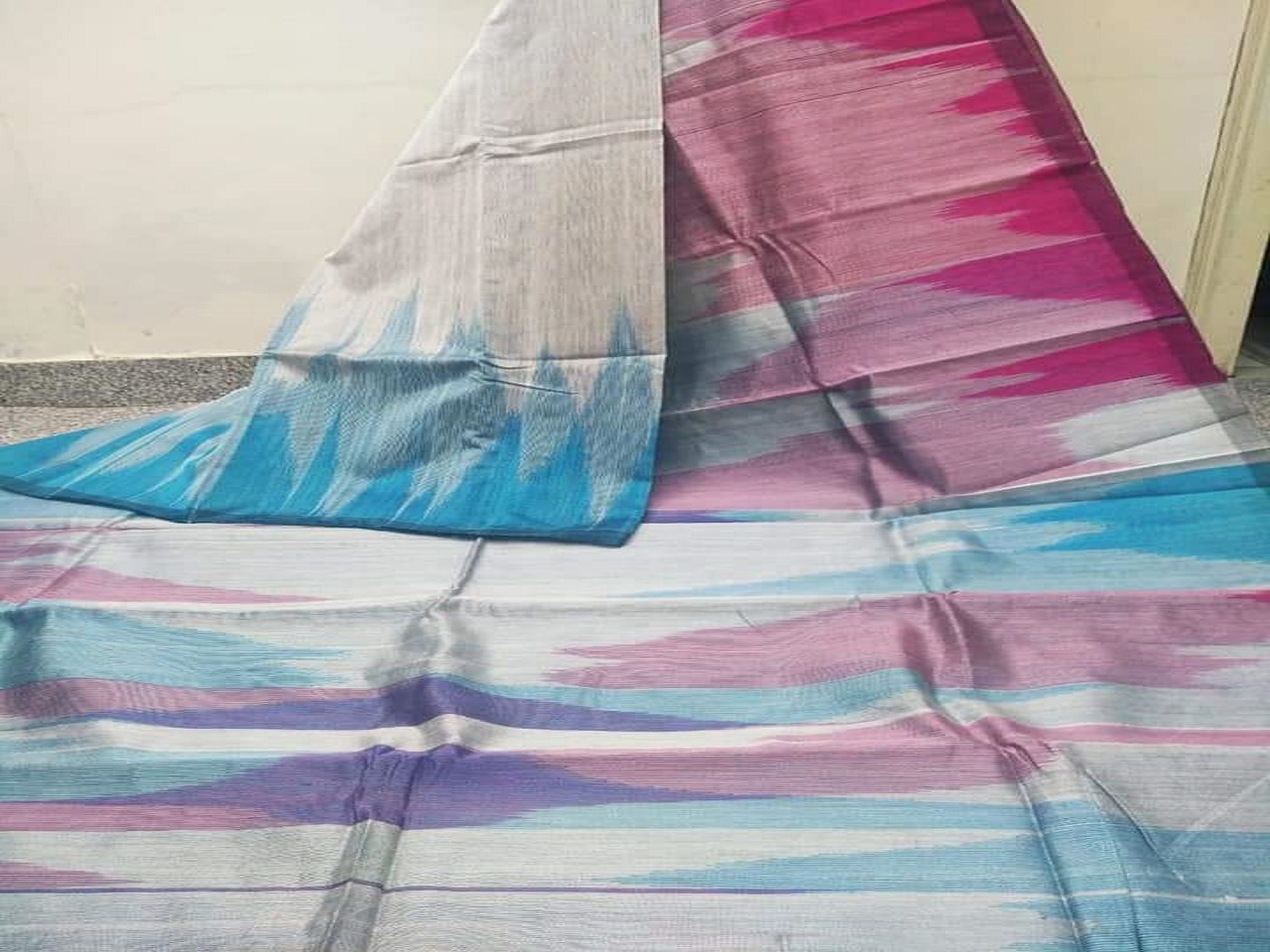
Orissa Ikat uses a process called `resist dying’. Essentially the core fabric materials used in the Orissa Ikat are silk or cotton. The tools required for carrying out the process are – Pick, scissors, dye vats, rubber bands, or other tying material to resist dye.
The process starts with the warp or weft threads being bundled and bound with rubber bands which can resist the action of dye colors. The bundles, then, are tied to a wooden frame and put into the dye vat. Here they are given repeated dye treatments to generate bands of pattern.Once the dying process is completed, then starts the complex and intricate process of weaving these threads into a stable piece of fabric. The entire process involves almost an entire family’s participation in different aspects.
Art Silk
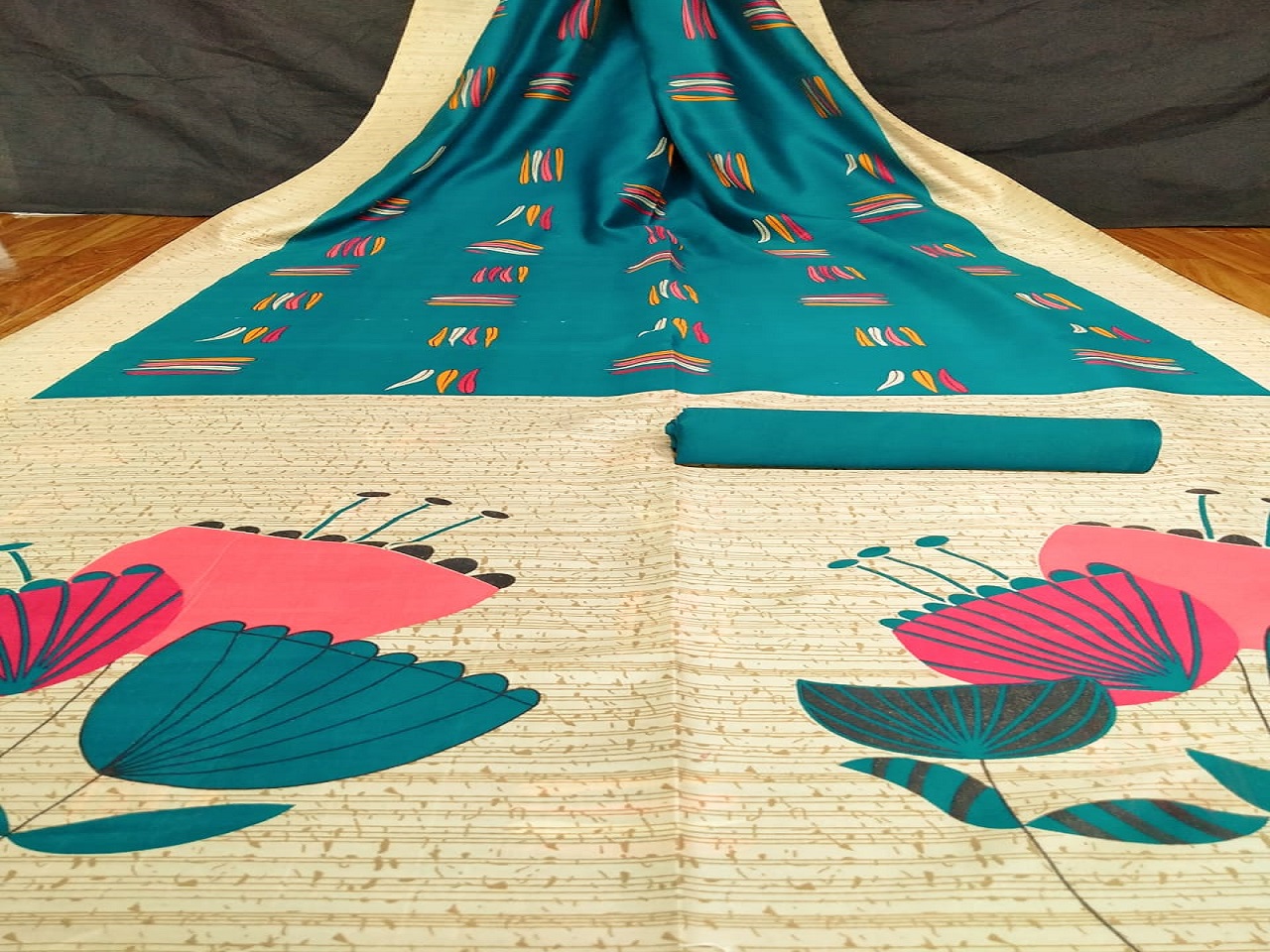
Artificial silk or art silk is any synthetic fiber which resembles silk, but typically costs less to produce. Frequently, "artificial silk" is just a synonym for rayon.[1] When made out of bamboo viscose it is also sometimes called bamboo silk.
A woman wearing a Utility rayon shirt dress with front-buttoning, 1943 The first successful artificial silks were developed in the 1890s of cellulose fiber and marketed as art silk or viscose, a trade name for a specific manufacturer.

BRK Collection
Just me, myself and I, exploring the universe of uknownment. I have a heart of love and a interest of sarees. I want to share my world with you.
Popular Posts
-
Paithani
-
Peshwai
-
Khun
Tags
Sarees Paithani Peshwai Irkal Banarasi Khun Ikkat Bhagalpuri Art Silk